











The Philippine Report referenced against the ASEAN Qualifications Reference Framework (AQRF) has been accepted as aligned to the AQRF Referencing Criteria and has been endorsed by the AQRF Committee to the ASEAN Ministers of Economy, Education and Labour.
The AQRF is a common reference framework, functioning as a device to enable comparisons of qualifications across ASEAN Member States (AMS). It addresses the education and training sectors that aim to support lifelong learning and the mobility of workers and learners. The AQRF is underpinned by 11 referencing criteria which is a set of agreed quality assurance principles and standards. The journey of iteratively revising the Philippine Referencing Report to the AQRF, in response to comments from the AMS and international experts, provided an opportunity to collectively reflect and arrive at a deeper and more nuanced understanding of the country’s education and training system.
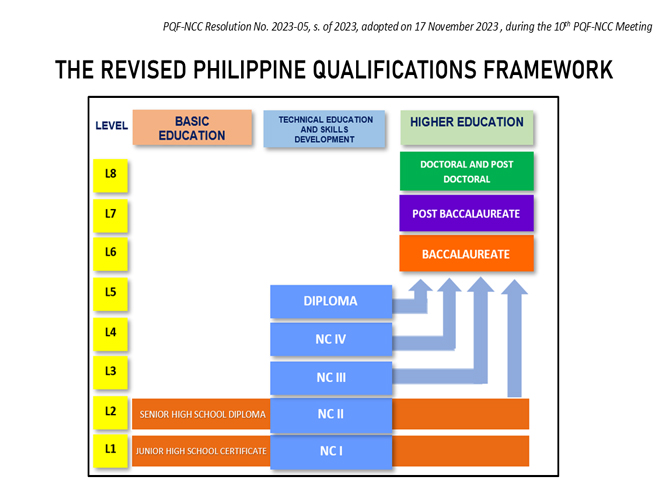
The report describes the Philippine education and training system and responsibilities and legal bases of all relevant national bodies involved in the referencing process. It also presented the procedures for the inclusion of qualifications in the PQF and in the Philippine Qualifications Register (PhQuaR). The report ascertains the demonstrable link between the qualification levels in the PQF and the AQRF and the basis in agreed standards of the qualifications system. A mapping of the complex quality assurance system of the Philippines follows the discussion of standards.
The Philippine report was developed by the National Referencing Committee established specifically for the AQRF referencing and was endorsed by the PQF National Coordinating Council. The writing of report began in May 2017 and the drafts were subjected to validation and consultations with various stakeholders. Comments and additional inputs from local stakeholders were discussed within the NRC and with related stakeholders and were incorporated in the revisions of the draft.
The Report was considered through a peer evaluation process among the members of the AQRF Committee in meetings and workshops and in intersessional exchanges of clarifications and revisions. The Referencing Report of Malaysia was also considered and endorsed following the same process.
The Philippine Report to the AQRF Referencing is a major effort to fulfill one of the objectives of Republic Act 10968, also known as the PQF law, which is to align domestic qualification standards with international qualifications frameworks for recognition of the value and comparability of Philippine qualifications thereby supporting the mobility of Filipino workers and learners.
The Philippine Report is published in full in the PQF website at https://pqf.gov.ph (275 pages/ 12 sections).